Shaker, Flat Panel, or Handleless: How to Choose a Kitchen Cabinet Style That Won't Date in 5 Years
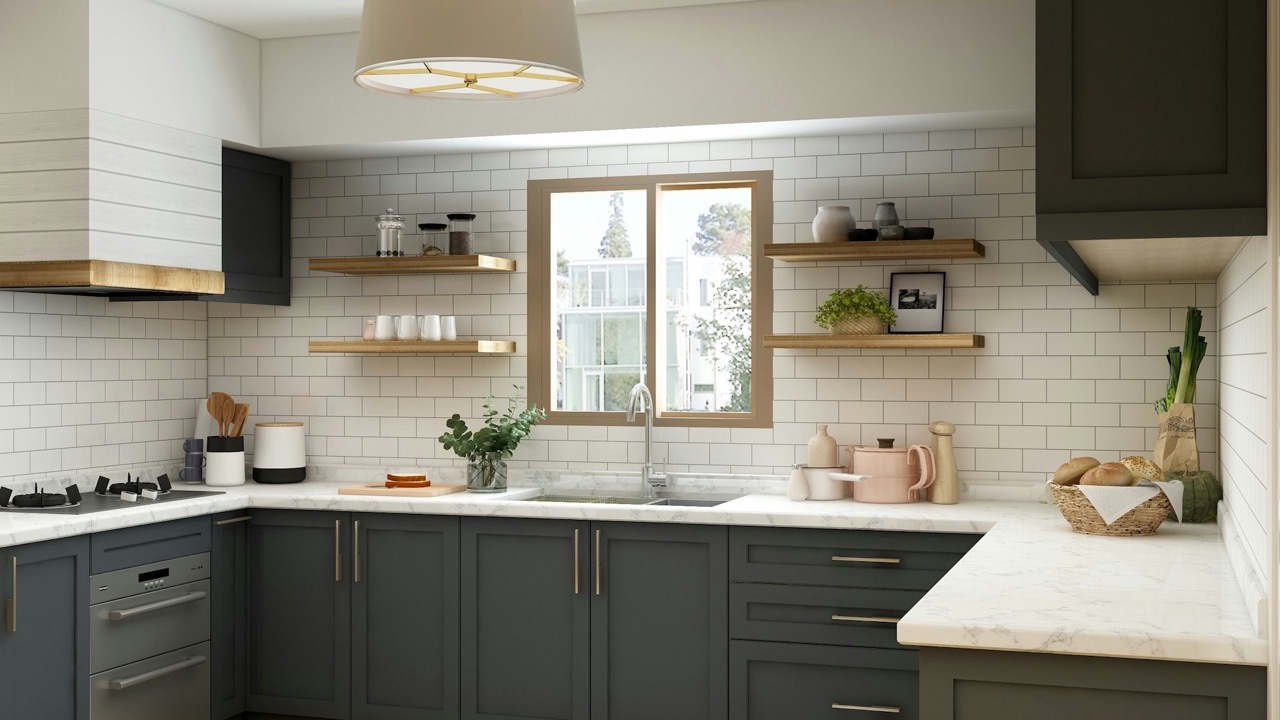
Walk into any kitchen showroom and you’ll see roughly the same three cabinet styles repeated in different colors and materials: Shaker, flat panel, and handleless. Everything else is a variation on one of these three.
Most people pick one based on what looks good in the showroom on the day they visit. That’s not a terrible approach, but it has a flaw: showrooms are lit to make everything look good. Your kitchen is lit by morning sunlight, afternoon shadows, and an overhead fixture you chose before you knew what the cabinets would look like. What reads as elegant in a showroom can feel flat or heavy in real life. And by the time you find out, the cabinets are already installed.
The better approach is to understand what each style actually does — what it looks like under different conditions, what it hides and what it emphasizes, and which kitchen situations each one is genuinely suited for. Then you can make a decision based on your actual kitchen rather than a beautifully staged display.
Here’s how to think through it.
Shaker: The Style That’s Hard to Get Wrong (For a Reason)
Shaker cabinets have been the dominant kitchen style for about fifteen years. They show no sign of going anywhere. Before you dismiss them as boring or safe, it’s worth understanding why they’ve lasted.
The Shaker style is defined by a simple recessed panel in the door center, framed by a flat border. That’s it. The appeal is that this one detail does a lot of visual work: the raised frame creates depth and shadow, which makes the cabinet door look substantial rather than flat. The recessed center keeps it from feeling heavy. The result is a door that reads as solid and well-made under almost any lighting condition.
This is genuinely important. Flat surfaces — which we’ll get to — look completely different depending on how light hits them. A flat panel door in a kitchen with direct morning sun will catch every fingerprint, every small scratch, and every slight variation in the finish. The Shaker door’s recessed center breaks that surface up, which means imperfections are less visible and the door reads consistently across different light angles.
Where Shaker works well: Most kitchens. Particularly kitchens with a mix of natural and artificial light, kitchens where the cabinets will be used heavily (families, cooking-oriented households), and kitchens where you want something that will still feel right in ten years without feeling dated.
Where Shaker gets overcrowded: Very small kitchens where the framing detail adds visual busyness to an already tight space. And very contemporary spaces where the aim is maximum minimalism — the frame, however slim, adds a note of detail that works against a completely stripped-back aesthetic.
The 2026 version of Shaker has gotten noticeably slimmer. Traditional Shaker frames were 1.5–2 inches wide. The current preference is for what’s sometimes called Slim Shaker — frames narrowed to around 0.75 inches — which keeps the depth effect of the recessed panel while looking considerably more contemporary. If you’re putting Shaker in a new kitchen right now, the slim profile will age better than the wide-frame version.
Flat Panel: The Style With the Highest Ceiling and the Lowest Floor
Flat panel (sometimes called slab door) is exactly what it sounds like: a completely flat door with no frame, no recess, no detail. The entire door surface is one uninterrupted plane.
Done well, flat panel looks genuinely exceptional. It’s the style used in high-end European kitchens, in architect-designed renovations, in spaces where the kitchen is meant to be an object rather than just a function. When the material is right and the finish is right and the lighting is right, flat panel looks more sophisticated than any other option.
The catch is that “when everything is right” is a high bar to meet, and flat panel is punishing when it isn’t met.
Flat surfaces amplify everything. In a flat panel kitchen, an uneven finish is immediately visible because there’s no frame or shadow to break it up. Fingerprints show more than on Shaker. Slight color variation between cabinet doors — which happens when doors are made in different production batches — is more noticeable because there’s nothing to visually interrupt the comparison. And a flat panel door that’s very slightly warped, even by a millimeter, is obvious in a way that a Shaker door with the same warp is not.
This means flat panel makes extremely high demands on manufacturing quality. The finish has to be flawless. The color has to be perfectly consistent across every door. The doors have to be perfectly flat. When these conditions are met — as they are with a well-run manufacturer using properly controlled spray booths and high-quality board material — the result is stunning. When they’re not, flat panel makes every shortcut visible.
Where flat panel works well: Kitchens with controlled, diffuse lighting (not direct sunlight hitting the cabinet faces). Minimalist spaces where the clean surface fits the overall aesthetic. Renovations where quality control over the manufacturing is high enough to deliver consistent finish.
Where flat panel struggles: Kitchens with strong directional light from windows. Households with children or heavy daily use, where fingerprints and marks are constant. Situations where you can’t verify the manufacturing quality before production — because you won’t find out about inconsistencies until the cabinets are installed.
The material choice matters more for flat panel than for any other style. High-gloss lacquer on flat panel looks spectacular and shows everything. Matte lacquer on flat panel looks sophisticated and hides more. If you’re choosing flat panel in a practical kitchen, matte is almost always the better call.
Handleless: The Style That’s Really About Hardware, Not Style
Handleless cabinets are sometimes categorized as a separate style, but they’re more accurately a hardware approach that can be applied to either Shaker or flat panel doors. The door itself doesn’t change — what changes is how you open it.
There are two main mechanisms: a recessed grip channel routed into the top or bottom of the door (called a J-pull or integrated handle), and a push-to-open mechanism where the door springs open when you press it. Each has meaningfully different practical implications.
Integrated grip channels (the routed groove) create the clean look of no visible hardware while giving you a physical edge to grip. The groove is typically at the top of upper cabinet doors and the bottom of lower cabinet doors. It works reliably, ages well, and doesn’t add any mechanical complexity to the cabinet. The visual result is very clean. The practical consideration: the groove can accumulate grease in a cooking kitchen, and cleaning inside the channel requires a little more effort than wiping a flat surface or a handle.
Push-to-open mechanisms are more dramatic — the cabinet appears to have no way to open it at all, until you press and it springs forward. The look is striking. The mechanism is also a moving part that can wear out or lose calibration over years of use. In a light-use kitchen, this isn’t much of a concern. In a kitchen that’s opened dozens of times a day, the mechanism will need adjustment or eventual replacement. Not a dealbreaker, but worth knowing before you commit.
Where handleless works well: Modern and minimalist kitchens where visual cleanliness is a priority. Island cabinets, where the lack of protruding handles means you can walk past without catching yourself. Households without small children, who sometimes struggle with push-to-open mechanisms.
Where handleless is harder to justify: Kitchens with heavy daily use, where the mechanical complexity of push-to-open is a maintenance commitment. Families with young children, who tend to find conventional handles and grips more intuitive. And any kitchen where the owner is likely to want to change the look in a few years — because conventional handle hardware is easy to swap, while integrated grooves and push mechanisms are built into the cabinet structure.
The Question Nobody Asks but Should: What Does This Style Look Like When It’s Dirty?
A clean kitchen in a showroom always looks good. The actual test of a cabinet style is how it looks on a Tuesday morning after a weekend of cooking — after handprints, after steam, after the oil splatter that didn’t quite hit the backsplash.
Shaker: fingerprints show mainly on the flat recessed center, where they’re visible but contained. The framing shadows mean the door still reads as structured even when the center needs a wipe.
Flat panel high-gloss: shows everything. Every fingerprint, every water mark, every slight smudge. If you have a high-gloss flat panel kitchen, you will wipe it more often than you expect. Whether this is acceptable depends entirely on your tolerance for visible marks and your willingness to wipe down cabinets as part of your kitchen routine.
Flat panel matte: much more forgiving. Matte surfaces scatter light rather than reflecting it, which means marks are less immediately visible. Matte flat panel is a genuinely practical choice for daily use.
Handleless with integrated groove: slightly more to clean (the groove), but the door surface behaves like whichever finish you’ve chosen — matte behaves like matte, gloss behaves like gloss.
A Simple Way to Decide
If you’re still not sure, here’s a shortcut that works for most kitchens:
You have children, you cook often, or you want to think about this as little as possible: Slim Shaker in a matte or satin finish. It will look good, stay looking good, hide normal wear, and still be considered a good choice when you sell the apartment or redo the kitchen in twelve years.
You want a very modern look and you’re willing to pay attention to manufacturing quality: Flat panel in matte lacquer. Verify that your manufacturer uses a properly controlled spray booth and checks color consistency batch to batch. If they can’t explain their finish QC process clearly, choose something else.
You want the cleanest possible look and don’t mind the occasional maintenance consideration: Handleless with integrated groove channels rather than push-to-open. You get the visual effect without the mechanical commitment.
The style that ages best isn’t always the trendiest one in a given year. It’s the one that fits your actual kitchen, your actual light, and your actual life — and still looks right when the trend has moved on.
For a sense of how these styles translate into actual cabinetry options, you can explore kitchen cabinet styles at PIANO Interiors, where the range covers each of these approaches in different finishes and configurations — which makes it easier to compare how the same style reads in different materials side by side rather than across different showrooms.